

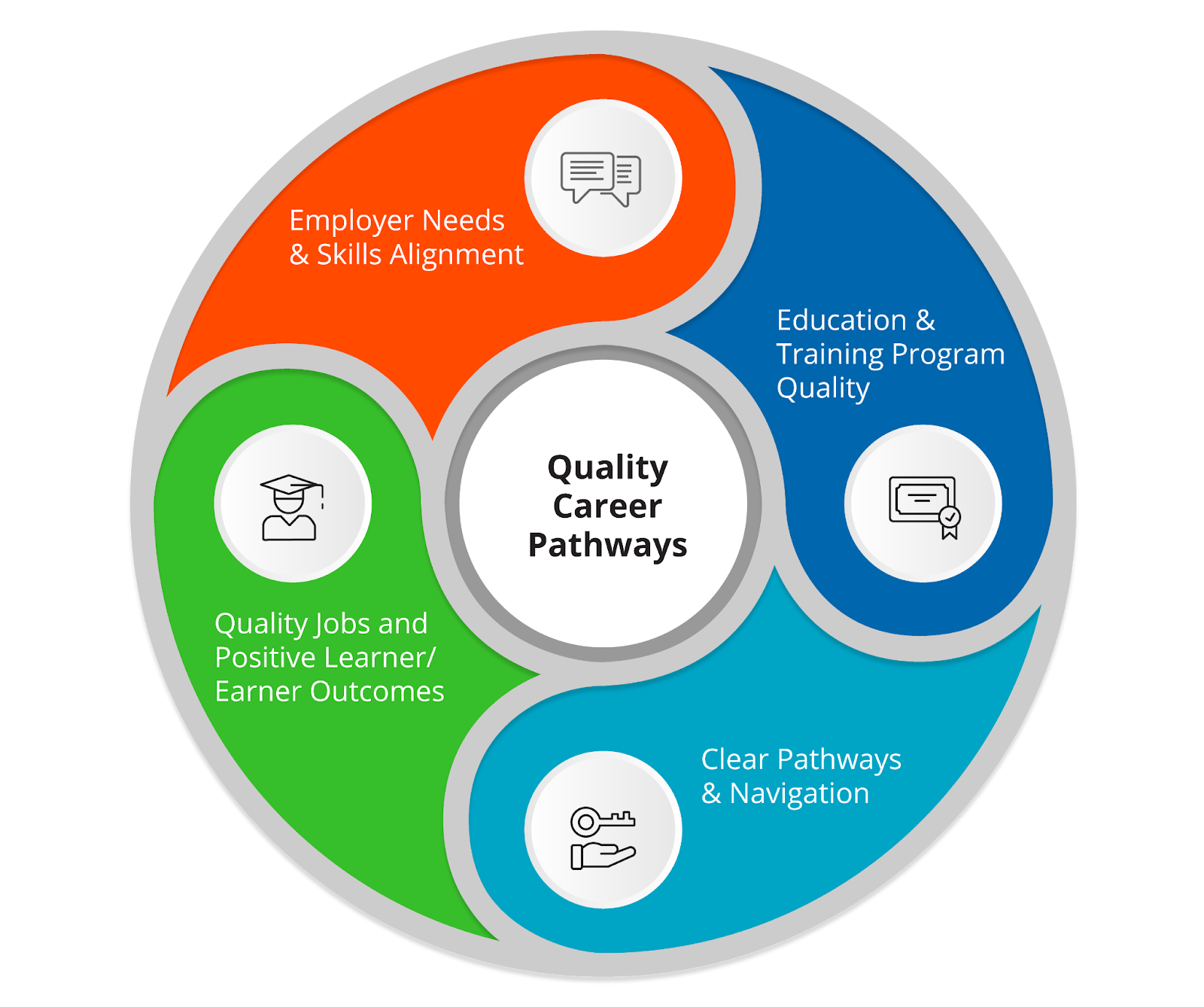
During the December 17, 2025, session of the Adult Education/Workforce Development Convening, Workforce Director Carol Salter shared insights into how Weld County is reimagining the journey into the healthcare field. By applying the state’s new Quality Career Pathway Framework, they are moving beyond traditional entry points and creating a more dynamic, responsive system for learners and employers alike.
Challenging the Status Quo: Data-Driven Insights
The journey began with a hard look at the data. Salter shared that initial findings showed a surprisingly low percentage of Certified Nursing Assistants (CNAs) transitioning directly into nursing programs—initially extremely low and later adjusted to less than 10% after the State Board of Nursing conducted its own reporting.
While these numbers were lower than many expected, they served as a vital catalyst for conversation. It highlighted that while the CNA role is a valuable "jumping-off point," it is not the only way into nursing, nor should it be viewed as the sole destination for entry-level healthcare workers.
Redefining the Entry Point: Exposure and Opportunity
A key element of Weld County's approach, as outlined by Salter, is recognizing the power of career exposure. A CNA role isn't just a stepping stone to nursing; it’s a window into the entire healthcare ecosystem.
"You might be working as a CNA and think, I really like what that respiratory therapist is doing, or that physical therapist is doing, and maybe that's the next step for me," Salter noted. By viewing entry-level positions through the lens of a career pathway framework, Weld County is encouraging learners to see these roles as opportunities to explore a variety of high-demand careers they may not have previously considered.
Meeting the Moment: Industry Partnerships and On-the-Job Training
The framework also addresses the urgent needs of healthcare providers facing significant staffing shortages. Salter highlighted that today’s healthcare environment is vastly different than it was even a decade ago.
Providers are now more "eager to take on people to help them get to where they need to go, and provide on-the-job training." This shift represents a core pillar of a quality career pathway: strong industry partnerships that prioritize learner employment and provide the support necessary for professional growth within the workplace.
Looking Ahead
Weld County’s work serves as a powerful example of the quality career pathway framework in action. By utilizing data to challenge assumptions, emphasizing the importance of career exposure, and fostering deep partnerships with employers and academic partners, they are creating a more inclusive and effective workforce development system—one that meets learners where they are and provides them with the tools to reach their full potential in the healthcare field.